

Carbon Capture and Storage Market CAGR Register at 12.6% By Driving Demands and Global Trends, During 2026–2035
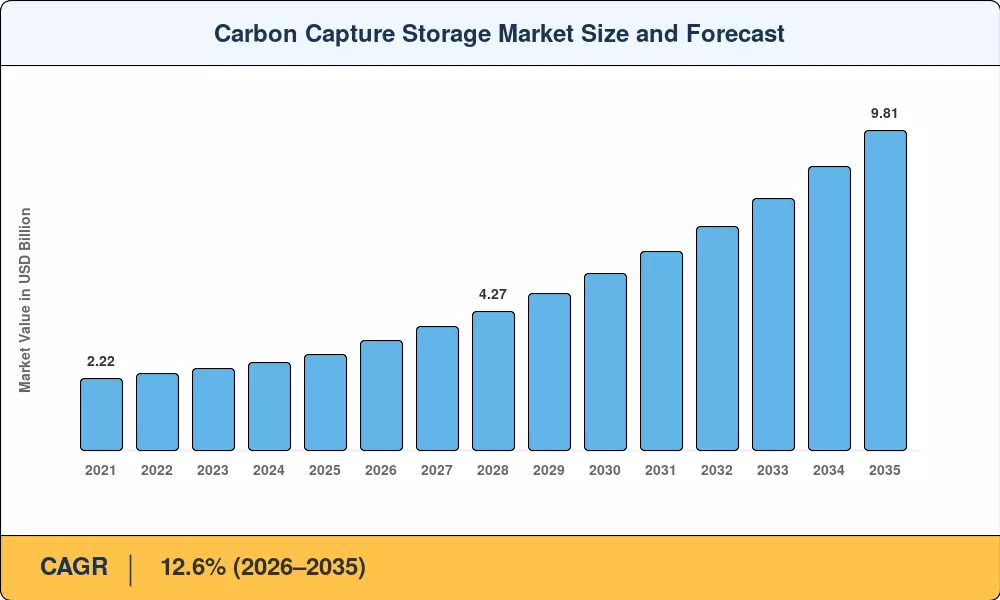
Carbon Capture and Storage Market Summary
Europe is projected to deliver the fastest regional growth, supported by the EU ETS Phase IV framework and North Sea storage developments.
Pre-combustion capture accounted for approximately 76% of the Carbon Capture and Storage Market in 2025, reflecting its established role in hydrogen production and syngas processing.”
NY, CA, UNITED STATES, July 15, 2026 /EINPresswire.com/ -- Carbon Capture and Storage (CCS) is a suite of technologies designed to capture carbon dioxide (CO₂) emissions from industrial processes and power generation, transport it via pipelines or ships, and store it permanently underground in geological formations such as depleted oil and gas reservoirs or deep saline aquifers. CCS is recognized as a critical tool for achieving global net-zero targets, particularly for hard-to-abate industrial sectors where emission reductions are challenging through other means.— Arti Dhapte
Carbon Capture and Storage Market Overview
The Carbon Capture and Storage Market Share stood at USD 2.95 Billion in 2025 and is projected to reach USD 3.37 Billion in 2026 before climbing to USD 9.81 Billion by 2035, registering a CAGR of 12.6% during 2026–2035. This expansion traces directly to the U.S. Inflation Reduction Act's enhanced 45Q tax credit — now worth up to USD 85 per tonne for dedicated geological storage — and the European Union's Carbon Border Adjustment Mechanism, which prices embedded emissions in imported steel, cement, and aluminium. Together, these instruments have shifted the Carbon Capture and Storage Market from niche demonstration projects to bankable commercial infrastructure.
The market is experiencing significant growth driven by several key factors. The expansion of carbon-pricing mechanisms worldwide has created economic incentives for capture, with the EU Emissions Trading System Phase IV allowance prices exceeding EUR 90 per tonne by the end of 2024, making capture-and-store economics feasible for cement and steel companies. Canada's federal carbon pricing hit CAD 80 per tonne in 2024 and is set to increase to CAD 170 by 2030, providing a reliable price signal that underpins project finance.
Industry trends indicate a shift from first-generation amine scrubbers to advanced solvent blends, membrane contactors, and solid-sorbent systems that promise 30–40% lower energy penalties. The U.S. Department of Energy committed USD 3.5 billion through its Carbon Capture Demonstration Projects Program to accelerate next-generation capture at coal, gas, and industrial facilities, while the EU Innovation Fund allocated EUR 1.8 billion across fifteen large-scale CCS projects in 2024 alone.
Technological developments are reshaping the market landscape. Direct Air Capture (DAC) technology is advancing with modular facilities that capture CO₂ directly from ambient air, targeting per-tonne costs below USD 200 by 2030. Digital optimization and AI-driven operations are transforming capture facilities, with real-time solvent management algorithms reducing energy penalties by 10–15% at pilot installations. Hub-and-cluster platform economics are shifting from point-to-point project design toward shared transport-and-storage hubs, reducing per-tonne storage costs by 40–60% compared with standalone projects.
Policy and regulatory influence continues to shape market dynamics. The updated EU Industrial Emissions Directive mandates Best Available Technique assessments to include CCS preparedness for new permits granted after 2026. Japan's GX Transition Bonds allocated JPY 1.1 trillion for industrial decarbonization, including steelworks carbon capture. The ISSB's S2 climate disclosure standard and the EU's CSRD mandate Scope 1 emissions reporting at the facility level, creating audit-trail requirements that favor permanent geological storage.
Get Free Sample Report for Detailed Market Insights:
https://www.marketresearchfuture.com/sample_request/1862
Carbon Capture and Storage Market Segmentation
By Technology
Pre-Combustion Capture: Accounted for approximately 76% of the market in 2025, reflecting its established role in hydrogen production and syngas processing
Post-Combustion Capture: Growing at approximately 14.5% CAGR, offering retrofit flexibility for existing coal and gas plants
Oxy-Fuel Combustion Capture: Fastest-growing technology segment at a projected CAGR of roughly 19.6% through 2035, ideal for cement and glass applications
By End-User Industry
Oil and Gas: Represented about 64% of market size in 2025, driven by EOR applications and gas-processing separation
Coal and Biomass Power Plant: Valued at USD 0.44 billion in 2025, supported by retrofit mandates and BECCS potential
Iron and Steel: Growing at approximately 18% CAGR, addressing blast-furnace emissions and EU ETS exposure
Cement: Expanding at roughly 21% CAGR due to unavoidable process emissions and CBAM pressure
Chemical: Expected to expand at a CAGR of approximately 27% between 2026 and 2035, driven by ammonia and ethylene decarbonization mandates
By Application
Enhanced Oil Recovery (EOR): Dominant application utilizing captured CO₂ for improved oil extraction
Dedicated Geological Storage: Fastest-growing segment for long-term CO₂ sequestration in saline aquifers and depleted reservoirs
Competitive Landscape / Key Players
The Carbon Capture and Storage Market exhibits medium concentration, with the top five players accounting for an estimated 35–42% of global revenue. Competition blends major integrated energy companies with specialized technology providers and industrial-gas firms.
Shell plc (~8-11% revenue share): Offers integrated capture-to-storage capability through Quest CCS, Polaris project, and Northern Lights joint venture participation.
ExxonMobil (~7-10%): Features the largest announced CCS investment portfolio among supermajors, including the Baytown hub and LaBarge facility.
Equinor (~5-7%): Pioneer in offshore saline-aquifer storage with Northern Lights, Sleipner, and Snøhvit projects.
Linde plc (~4-6%): Provides solvents and gas-separation systems with hydrogen-CCS integration and global EPC partnerships.
Air Liquide (~3-5%): Specializes in Cryocap technology and industrial CO₂ purification for refinery and chemical applications.
Other notable players include Mitsubishi Heavy Industries, Baker Hughes, Schlumberger (SLB), Aker Carbon Capture, TotalEnergies, Fluor Corporation, and Honeywell UOP. Recent developments include the Northern Lights JV commencing commercial CO₂ injection operations in August 2025, and the U.S. EPA granting Class VI primacy to Texas in November 2025, accelerating storage site development.
You can buy this market report at:
https://www.marketresearchfuture.com/checkout?currency=one_user-USD&report_id=1862
Carbon Capture and Storage Market Regional Analysis
North America
North America led the Carbon Capture and Storage Market with close to 47% revenue share in 2025. The United States accounts for approximately 78% of regional share, driven by 45Q credits, Class VI permitting acceleration, and the Gulf Coast's unmatched pipeline and saline-aquifer infrastructure. Canada contributes with the Alberta Carbon Trunk Line and the Pathways Alliance — a consortium of six oil-sands producers targeting 22 MTPA of capture by 2030. Mexico represents an emerging market with Pemex refinery modernization and developing regulatory frameworks.
Europe
Europe is projected to deliver the fastest regional growth, supported by the EU ETS Phase IV framework and North Sea storage developments. Germany accounts for approximately 18% of regional share with its CCS Strategy Act 2024 and industrial decarbonization initiatives. The UK's Track-1 clusters (HyNet, East Coast) and revenue support mechanisms drive a CAGR of roughly 27%. The Northern Lights project in Norway achieved its first CO₂ injection in 2025, creating an open-access storage service model. The Netherlands' Porthos project and Denmark's full-scale bioenergy CCS projects further strengthen the European market position.
Asia-Pacific
Asia-Pacific contributed roughly USD 0.56 billion in 2025, anchored by industrial capture projects in China and Japan. China leads with approximately 42% of regional share, driven by coal-power retrofit requirements and the Sinopec Qilu-Shengli CCUS project. India's National CCUS Mission supports a CAGR of approximately 22%, focusing on steel and cement sector decarbonization. Japan's CCS Long-Term Roadmap and Tomakomai offshore storage project represent key investments. South Korea's Donghae gas-field CO₂ storage and K-CCUS Alliance further contribute to regional growth.
Rest of the World
South America, led by Brazil with approximately 68% of regional share, features Petrobras' pre-salt CO₂ reinjection program handling over 10 MTPA. The Middle East & Africa region posts a CAGR of approximately 14%, with Saudi Aramco's Jubail facility capturing 0.8 MTPA and the UAE's expanding CCS roadmap. South Africa's Sasol coal-to-liquids capture potential represents an emerging opportunity.
Latest Industry News & Developments
Northern Lights JV (August 2025): Commenced commercial CO₂ injection operations at its offshore facility west of Bergen, Norway, becoming Europe's first open-access CO₂ transport and storage service.
U.S. EPA (November 2025): Formally granted independent Class VI Underground Injection Control primacy to the State of Texas, accelerating storage site development across the Carbon Capture and Storage Market.
HeidelbergCement / Heidelberg Materials (December 2024): Achieved mechanical completion of the Brevik full-scale CCS facility in Norway, designed to capture 400,000 tonnes of CO₂ annually from cement production.
Chevron (November 2023): Expanded the Gorgon CCS project in Western Australia with additional injection well capacity, targeting 4.0 MTPA to meet revised regulatory capture obligations.
Carbon Capture and Storage Market Challenges & Opportunities
Key Restraints
High upfront capital costs present a significant challenge, with a commercial-scale capture unit tied to a 500 MW coal plant costing USD 800 million to USD 1.2 billion. Long permitting and environmental review cycles, with the U.S. Class VI permit process averaging 4.7 years per application as of 2024, create bottlenecks delaying storage site development. Public opposition to routing CO₂ pipelines and geological storage has delayed several projects in the U.S. Midwest and European countries. Competition from renewable alternatives and limited qualified workforce for CCS operations further constrain growth.
Emerging Opportunities
Direct Air Capture commercialization represents a frontier opportunity, with the U.S. DOE's four Regional DAC Hub awards totaling USD 3.5 billion, aiming to bring per-tonne costs below USD 200 by 2030. Carbon credit monetization and trading platforms offer premium pricing for verified CCS-based removal credits, often three to five times the price of nature-based offsets. Emerging-market industrial decarbonization in India, Southeast Asia, and Africa presents latent demand with substantial offshore storage geology. Blue hydrogen as anchor demand provides stable, large-volume demand for capture infrastructure, supported by the U.S. Regional Clean Hydrogen Hubs program allocating USD 7 billion across seven hubs. Cross-border CO₂ transport networks unlock shared storage resources for landlocked industrial emitters.
Future Potential
The electrification and green-blue hydrogen convergence is driving continuous improvement in capture rates from the current 90% benchmark toward 95–99%, pushing the market toward higher-performance next-generation systems. ESG disclosure and carbon-removal accounting standards strengthen institutional demand as reporting requirements tighten. Hub-and-cluster platform economics transform the market into a networked infrastructure business, attracting utilities and logistics companies alongside traditional energy players. The IEA projects that hub models will dominate new CCS investments, fundamentally altering cost structures and accelerating deployment timelines through 2035.
To explore more market insights, visit us at:
https://www.marketresearchfuture.com/reports/carbon-capture-storage-market-1862
Final Market Summary
The global Carbon Capture and Storage Market is positioned for exceptional growth, with projections indicating expansion from USD 3.37 billion in 2026 to USD 9.81 billion by 2035 at a 12.6% CAGR. Market dynamics are driven by the convergence of carbon-pricing mechanisms, enhanced government tax credits and subsidies, and hard-to-abate sector decarbonization mandates. The shift from first-generation solvent systems to advanced capture technologies and hub-based infrastructure models is transforming the market landscape.
North America remains the dominant market with approximately 47% share, while Europe delivers the fastest regional growth driven by aggressive decarbonization targets and cross-border CO₂ transport agreements. Asia-Pacific presents significant opportunities with coal-fleet retrofits in China and Japan's strategic offshore storage investments. While challenges including high capital costs and permitting delays persist, the long-term industry outlook remains robust, supported by the essential role of CCS in enabling net-zero emissions across power generation, industrial manufacturing, and the broader decarbonization supercycle. The decade ahead will test whether policy momentum translates into sustained deployment at the gigaton scale, with hub-and-cluster economics and digital optimization driving the next phase of market maturation.
More Related Reports from MRFR Library:
Gas Insulated Transmission Line Market https://www.marketresearchfuture.com/reports/gas-insulated-transmission-line-market-31972
Gas Liquid Cooled Home Standby Genset Market https://www.marketresearchfuture.com/reports/gas-liquid-cooled-home-standby-genset-market-31983
Gasoline Powered Portable Inverter Generator Market https://www.marketresearchfuture.com/reports/gasoline-powered-portable-inverter-generator-market-31996
Geotechnical Services for Offshore Wind Market https://www.marketresearchfuture.com/reports/geotechnical-services-offshore-wind-market-32014
Grid Scale Battery Storage Market https://www.marketresearchfuture.com/reports/grid-scale-battery-storage-market-32056
Medium Voltage Industrial Electric Boiler Market https://www.marketresearchfuture.com/reports/medium-voltage-industrial-electric-boiler-market-32057
Low Temperature Industrial Boiler Market https://www.marketresearchfuture.com/reports/low-temperature-industrial-boiler-market-32058
Membrane Pump Market https://www.marketresearchfuture.com/reports/membrane-pump-market-32071
Low Voltage Protection Control Market https://www.marketresearchfuture.com/reports/low-voltage-protection-control-market-32081
Hybrid Microgrid Market https://www.marketresearchfuture.com/reports/hybrid-microgrid-market-32121
Larry Wilson
WantStats Research And Media Pvt. Ltd.
+1 855-661-4441
email us here
Visit us on social media:
LinkedIn
Facebook
YouTube
X
Legal Disclaimer:
EIN Presswire provides this news content "as is" without warranty of any kind. We do not accept any responsibility or liability for the accuracy, content, images, videos, licenses, completeness, legality, or reliability of the information contained in this article. If you have any complaints or copyright issues related to this article, kindly contact the author above.
